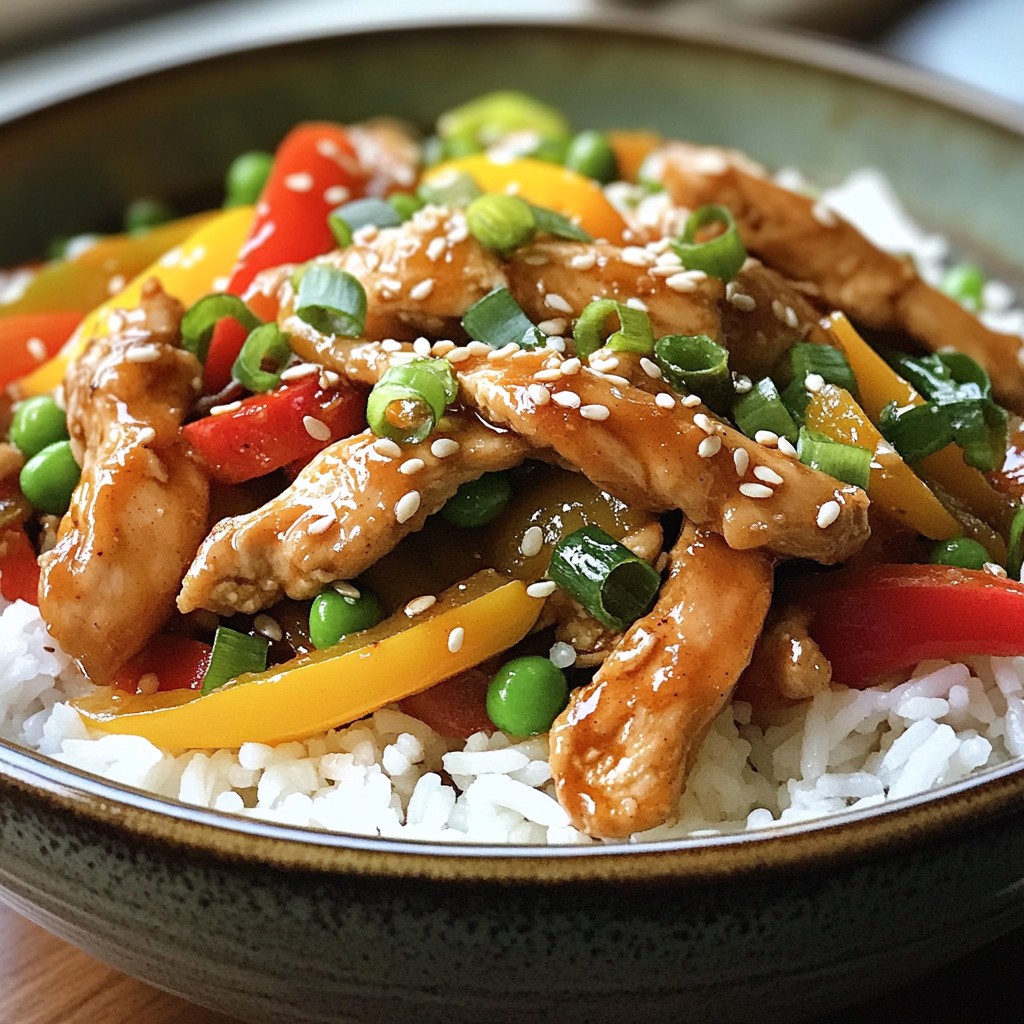
Craving a quick meal that packs a flavor punch? My Sesame Ginger Chicken Stir Fry is just what you need! With tender chicken, fresh veggies, and a savory sauce, this dish comes together in no time. Perfect for busy evenings or a weekend treat, it’s easy to customize with your favorite ingredients. Let’s dive into this simple recipe that will impress your family and friends!
Why I Love This Recipe
- Quick and Easy: This stir fry can be whipped up in just 25 minutes, making it a perfect weeknight dinner option.
- Flavor Explosion: The combination of sesame oil, ginger, and honey creates a deliciously balanced flavor profile that is sure to impress.
- Colorful and Nutritious: The vibrant bell peppers and snap peas not only make the dish visually appealing but also pack it with essential vitamins.
- Customizable: This recipe is versatile; you can easily swap in your favorite vegetables or protein to suit your taste.
Ingredients
Main Ingredients
- 1 lb boneless, skinless chicken breasts, sliced into thin strips
- 2 tablespoons sesame oil
- 2 cups mixed bell peppers, sliced (red, yellow, and green)
- 1 cup snap peas, trimmed
- 3 green onions, chopped
- 4 cloves garlic, minced
- 1 tablespoon fresh ginger, grated
- 3 tablespoons soy sauce (low sodium is preferred)
- 1 tablespoon honey
- 2 tablespoons sesame seeds
- Salt and pepper to taste
- Steamed jasmine rice, for serving
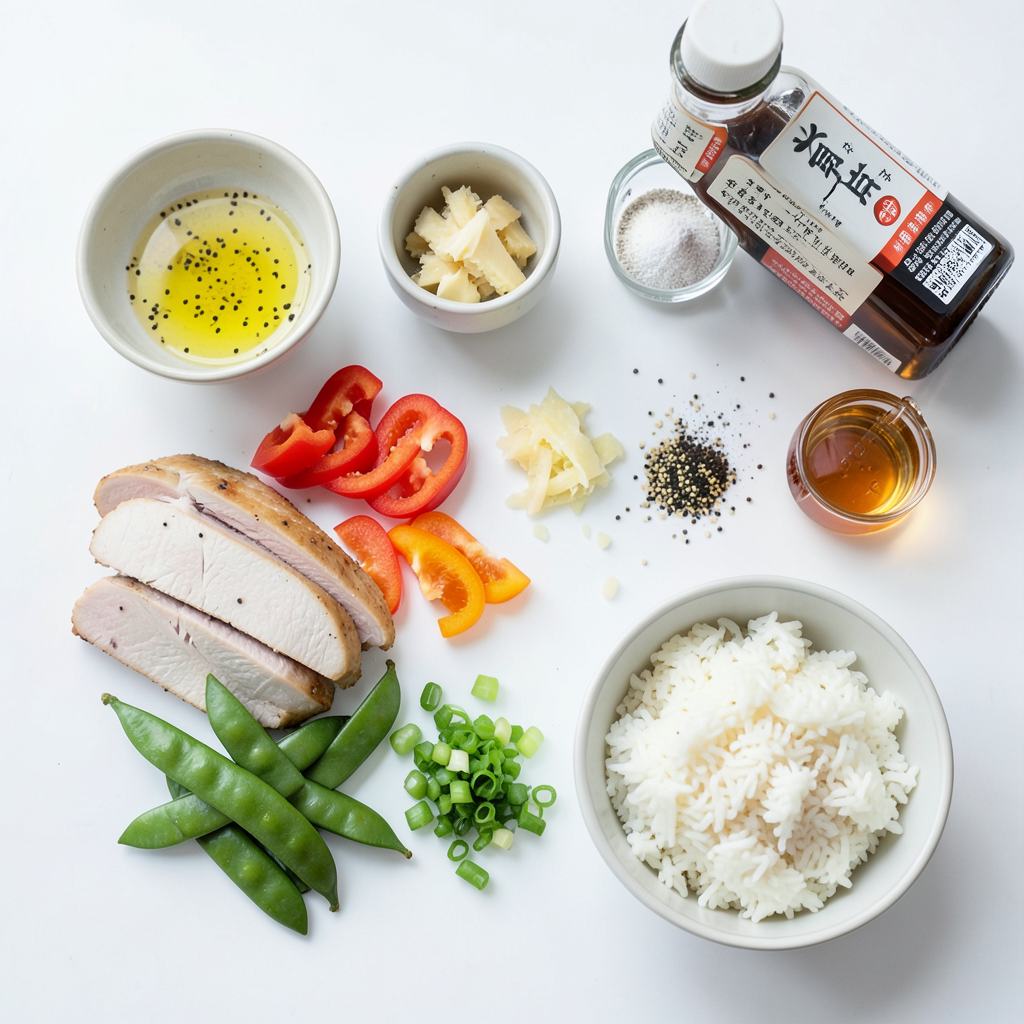
The main ingredients create a tasty and colorful stir fry. The chicken gives protein, while bell peppers and snap peas add crunch. Garlic and ginger bring warmth and flavor. The sauce balances sweet and salty, making every bite special.
Optional Ingredients
- Additional vegetables like broccoli or carrots
- Garnishes such as extra sesame seeds or sliced chilies
You can add more vegetables to make it even better. Broccoli and carrots add color and nutrition. For a kick, try adding sliced chilies as a garnish. These give your meal a fun twist.
Step-by-Step Instructions
Preparation Steps
Marinating the Chicken
First, take 1 pound of boneless, skinless chicken breasts and slice them into thin strips. In a medium bowl, mix the chicken with a good pinch of salt, pepper, and 1 tablespoon of soy sauce. This step adds flavor and makes the chicken juicy. Let it marinate for 15 minutes. This short wait will make a big difference.
Cooking the Chicken
Heat 1 tablespoon of sesame oil in a large pan or wok over medium-high heat. Once hot, add the marinated chicken strips. Stir-fry them for about 5 to 7 minutes. You want the chicken to turn golden brown and be fully cooked. Once done, transfer the chicken to a plate and set it aside.
Stir-Frying the Vegetables
Adding Aromatics
In the same pan, add another tablespoon of sesame oil. When it heats up, toss in 4 cloves of minced garlic and 1 tablespoon of grated fresh ginger. Stir-fry this mix for about 30 seconds. The smell will be amazing, but be careful not to burn the garlic!
Cooking the Vegetables
Now, add 2 cups of mixed bell peppers and 1 cup of snap peas to the pan. Stir-fry these vegetables for about 3 to 4 minutes. You want them to be tender-crisp and bright in color. This step keeps your stir-fry fresh and colorful.
Combining and Serving
Mixing Ingredients
Return the cooked chicken to the pan. Pour in the remaining 2 tablespoons of soy sauce and 1 tablespoon of honey. Toss everything together to coat the chicken and veggies with the sauce. Cook for another 2 to 3 minutes. This helps all the flavors blend together.
Presentation Tips
Just before serving, sprinkle sesame seeds and chopped green onions over the dish. Mix them in to add a burst of flavor. Serve the stir-fry over steaming jasmine rice for a perfect meal. You can even add more sesame seeds on top for a nice touch!
Tips & Tricks
Cooking Tips
Choosing the Right Chicken For this stir-fry, use boneless, skinless chicken breasts. They cook fast and stay juicy. Slice them thinly for quick cooking and even flavor. If you prefer darker meat, chicken thighs work well too. Just adjust the cooking time since they can take a bit longer.
Achieving Perfect Stir-Fry Texture To get that nice, crispy texture, heat your pan or wok well before adding the chicken. Use high heat and do not overcrowd the pan. Cook in batches if necessary. This method helps the chicken brown nicely instead of steaming.
Flavor Enhancements
Substitute Options If you don’t have sesame oil, try using peanut oil or olive oil. Both add good flavor. For soy sauce, use tamari for a gluten-free option. Honey can be swapped with maple syrup for a vegan alternative.
Spice Level Adjustments To add heat, mix in some red pepper flakes or sriracha. Start with a small amount, taste, and add more if you like it spicy. If you prefer a milder dish, skip the heat altogether.
Pro Tips
- Marinate for Maximum Flavor: Allow the chicken to marinate for at least 15 minutes to absorb the flavors of the soy sauce and spices, enhancing the overall taste of the dish.
- High Heat is Key: Stir-frying at medium-high heat ensures that the chicken gets a nice sear while keeping the vegetables crisp. Don’t overcrowd the pan to achieve the best results.
- Customize Your Veggies: Feel free to swap in your favorite vegetables or whatever you have on hand. Broccoli, carrots, or zucchini are great additions that can add more color and nutrition.
- Garnish for Presentation: A sprinkle of sesame seeds and chopped green onions not only adds flavor but also gives the dish a beautiful presentation, making it more appetizing.
Variations
Protein Alternatives
If you want to change up your protein, consider using tofu or shrimp.
- Tofu: Use firm tofu for a nice texture. Press it to remove extra water. Cut it into cubes to stir-fry with the same steps as chicken. Tofu absorbs flavors well, so it pairs nicely with the sauce.
- Shrimp: Shrimp cooks quickly and adds a sweet taste. Use peeled and deveined shrimp. Toss them in the pan after the garlic and ginger. Cook for 2-3 minutes until pink and opaque.
Vegetable Variations
Feel free to switch the veggies based on what you like or what’s in season.
- Seasonal Vegetable Options: Try using zucchini, broccoli, or asparagus. These add different flavors and textures. Choose what’s fresh at the market for the best taste.
- Colorful Vegetable Combinations: Mix and match bell peppers with carrots, snap peas, or bok choy. This not only makes your dish look great but also boosts nutrition.
Dietary Modifications
You can easily adapt this dish to fit dietary needs.
- Gluten-Free Options: Use gluten-free soy sauce instead of regular soy sauce. This keeps the flavor while making it safe for those with gluten allergies.
- Low-Carb Versions: Replace jasmine rice with cauliflower rice or zoodles (zucchini noodles). These options cut carbs while keeping your meal filling and tasty.
Storage Info
Leftovers
To store leftovers, first let the stir-fry cool to room temperature. Then, place it in an airtight container. This helps keep it fresh for up to three days in the fridge. Make sure to label the container with the date.
For reheating, use a microwave or stovetop. If using a microwave, heat on medium power for about 2-3 minutes. Stir halfway through to ensure even heating. On the stovetop, add a splash of water or soy sauce in a pan. Heat it over medium heat, stirring until hot.
Freezing
For freezing, place the cooled stir-fry in a freezer-safe container or a resealable bag. Remove as much air as possible to prevent freezer burn. It can last up to three months in the freezer.
When you're ready to eat, thaw the stir-fry in the fridge overnight. For a quicker method, you can use the microwave's defrost setting. Once thawed, reheat it as mentioned above, ensuring it reaches a safe temperature.
FAQs
Common Questions
How do I make this dish spicier? To spice up this dish, add crushed red pepper flakes or sriracha. Start with a small amount and taste as you go. You can also use a spicy soy sauce for an extra kick.
Can I use frozen vegetables? Yes, you can use frozen vegetables. Just make sure to thaw them first. Drain any excess water to avoid a soggy stir-fry. Frozen mixed veggies are a great time-saver.
Recipe Substitute Questions
What can I use instead of sesame oil? If you don’t have sesame oil, try using olive oil or vegetable oil. You can add a bit of toasted sesame seeds for flavor.
How can I make this dish low-sodium? Use low-sodium soy sauce and limit the amount you add. You can also skip the salt in the marinade. Fresh herbs can add flavor without extra sodium.
This article covered the key ingredients and steps to create a delicious stir-fry. You learned about the main and optional ingredients, preparation steps, and cooking tips. We also explored variations, storage methods, and answered common questions.
Remember, you can easily adjust the recipe to fit your taste or diet. Cooking should be fun and flexible. Enjoy experimenting with flavors and sharing your creations with others!