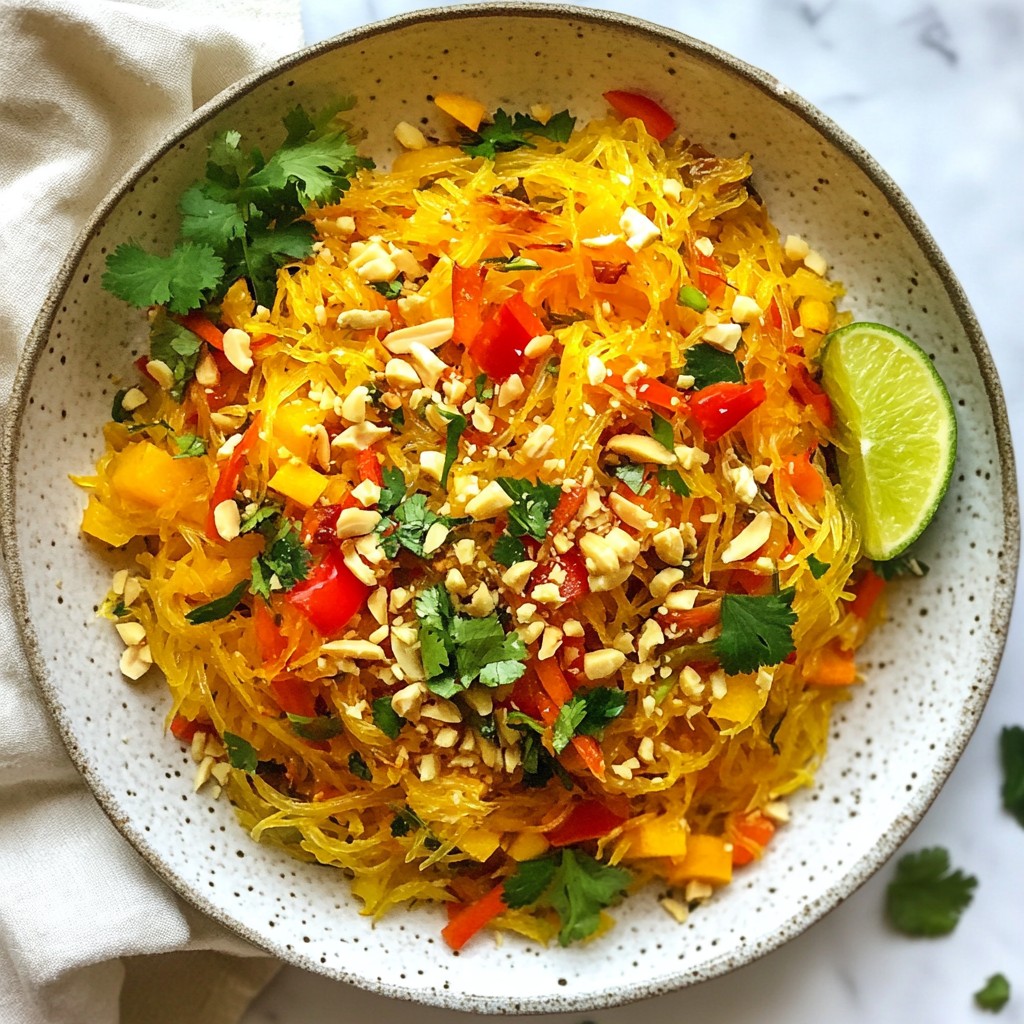
Are you ready to enjoy a fun twist on classic Pad Thai? Spaghetti Squash Pad Thai combines tasty flavors with a healthy spin. It's easy to make and uses simple ingredients like vegetables, soy sauce, and your choice of protein. In this blog post, I’ll guide you step-by-step to create a delicious meal that's sure to impress. Let's dive into making this flavorful dish!
Why I Love This Recipe
- Healthy Alternative: This recipe uses spaghetti squash instead of traditional noodles, making it a low-carb and nutritious option.
- Quick and Easy:
- Versatile Ingredients: You can easily customize this Pad Thai by adding your favorite vegetables or proteins, making it suitable for various dietary preferences.
- A Flavor Explosion: The combination of peanut butter, soy sauce, and lime juice creates a rich and tangy sauce that elevates the dish and tantalizes your taste buds.
Ingredients
Complete List of Ingredients
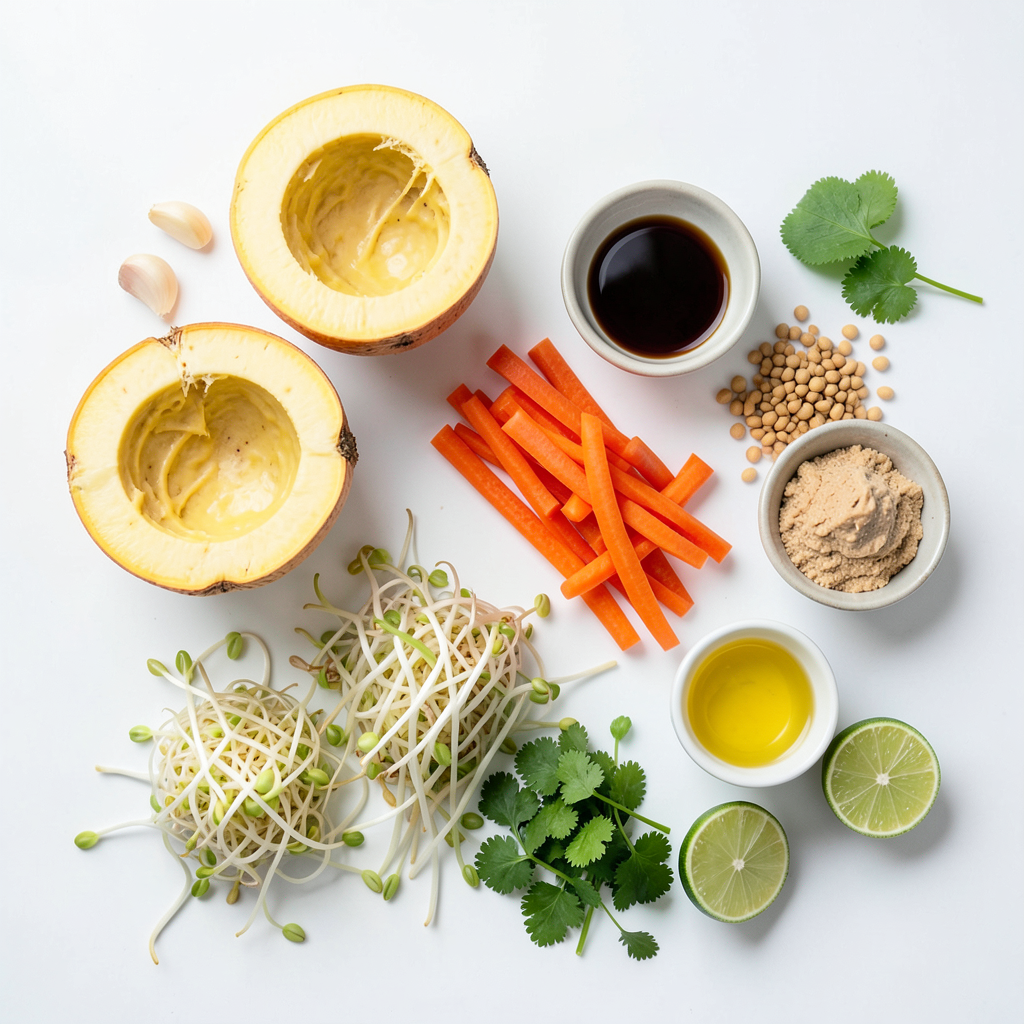
- Spaghetti Squash: Choose a medium-sized squash. Cut it in half and scoop out the seeds. This gives you the perfect base for your dish.
- Vegetables: Use 1 cup each of mixed bell peppers and julienned carrots. Add 1 cup of fresh bean sprouts for crunch. These veggies add color and nutrients.
- Condiments: You need 3 tablespoons of soy sauce for saltiness. Mix in 2 tablespoons of creamy peanut butter for richness. A tablespoon of fresh lime juice brightens the flavor.
- Protein: Use 2 large eggs for a quick protein boost. For a vegan option, substitute with scrambled tofu. Both options work well in this dish.
- Garnishes: Top your Pad Thai with ¼ cup of crushed peanuts for crunch. Fresh cilantro adds freshness, and lime wedges bring zest to each bite.
Step-by-Step Instructions
Preparing the Spaghetti Squash
1. Preheat the oven to 400°F (200°C). This step is key for roasting.
2. Halve the spaghetti squash lengthwise. Use a spoon to scoop out the seeds.
3. Brush the insides with coconut oil. This adds flavor and helps with cooking.
4. Place the squash cut-side down on a baking sheet. Roast for 30-40 minutes.
5. Check if it’s tender. You should easily shred the flesh into strands with a fork.
Cooking the Vegetable Base
1. Heat 2 tablespoons of coconut oil in a skillet over medium heat.
2. Add the minced garlic and sauté for about 1 minute. It should smell nice but not burn.
3. Stir in the bell peppers and carrots. Cook for 3-4 minutes until they are tender but still crunchy.
4. Push the veggies to one side of the skillet. Pour in the beaten eggs or tofu. Scramble until fully cooked.
5. Mix the eggs and veggies together in the skillet once they are ready.
Combining Ingredients
1. Stir in the bean sprouts, soy sauce, peanut butter, and lime juice. Mix well.
2. Heat for another 2-3 minutes. This allows all the flavors to blend nicely.
3. Scrape out the roasted spaghetti squash strands and add them to the skillet.
4. Gently fold the strands into the mix until everything is combined.
5. Remove from heat. Add sliced green onions and taste. Adjust seasoning if needed.
6. Serve warm. Garnish with crushed peanuts, fresh cilantro, and lime wedges on the side. Enjoy your meal!
Tips & Tricks
Best Practices for Cooking Spaghetti Squash
To cook spaghetti squash well, start by choosing a medium-sized squash. Use a sharp knife to slice it in half lengthwise. This helps cook it evenly. Scoop out the seeds with a spoon. This is easier if you use a small, sharp tool.
When roasting the squash, brush the insides with coconut oil. Place it cut-side down on a baking sheet. Roasting at 400°F for 30-40 minutes gives the best results. Check for tenderness by poking it with a fork. When it shreds easily, it's done.
For easy shredding, allow the squash to cool slightly. Then use a fork to scrape the flesh into strands. It should look like spaghetti.
Flavor Enhancements
To make your dish pop, add spices like chili flakes or garlic powder. A dash of sesame oil can also enhance the flavor. You can even mix in sriracha for a spicy kick.
Balancing flavors in Pad Thai is key. You want sweet, salty, and tangy notes. The peanut butter adds creaminess, while lime juice brightens the dish. Taste as you cook and adjust to your liking.
Cooking Techniques
Whether you use a skillet or a wok, each has its perks. A skillet is great for even heating. A wok allows for quick cooking and higher heat. If you go with a wok, keep your ingredients moving to cook evenly.
Adjust cooking times based on what you add. For example, if you use frozen veggies, they may take longer to cook. Always taste your dish before serving. This way, you can tweak the flavors and cooking times as needed.
Pro Tips
- Choose the Right Squash: Opt for a medium-sized spaghetti squash for optimal texture and flavor balance in your Pad Thai.
- Prep Ahead: To save time, you can roast the spaghetti squash a day in advance and store it in the fridge until you're ready to use it.
- Customize Your Veggies: Feel free to use any vegetables you have on hand. Zucchini, snap peas, or broccoli can be great additions!
- Perfecting the Sauce: Adjust the soy sauce and peanut butter to taste; a little more peanut butter can add creaminess, while extra lime juice can enhance the freshness.
Variations
Dietary Modifications
For a vegan option, you can replace the eggs with scrambled tofu. Tofu adds protein and keeps the dish filling without eggs. Just crumble it and cook it in the skillet. You can also use firm tofu for more texture.
For gluten-free choices, tamari is a great substitute for soy sauce. Tamari gives you the same savory taste without any gluten. Check the labels to ensure the sauces you choose are gluten-free.
Flavor Variations
You can add different veggies for a fun twist. Try zucchini, snap peas, or mushrooms. Each vegetable brings its own taste and texture. Mix and match your favorites to keep it exciting.
Another way to change the flavor is by trying different nut butters. Almond butter gives a mild taste, while cashew butter is creamy. These options keep the dish fresh and interesting.
Serving Suggestions
Pair your Spaghetti Squash Pad Thai with proteins like chicken, shrimp, or tofu. Each option adds its own flair. Chicken offers a classic taste, while shrimp brings a hint of the sea. Tofu keeps it vegan and is very satisfying.
For sides, a fresh salad or cucumber slices work well. They add crunch and coolness, balancing the warm noodles. Lime wedges are a must for squeezing on top for extra zing!
Storage Info
Storing Leftovers
To keep your Spaghetti Squash Pad Thai fresh, use airtight containers. Glass or plastic containers work well. Store leftovers in the fridge for up to three days. This helps keep the flavors vibrant and the texture nice.
Reheating Tips
To reheat, use gentle methods. The stovetop is best for keeping texture. Heat in a skillet over medium heat and stir often. This prevents overcooking. If you choose the microwave, use a lower setting. Heat in short bursts to avoid sogginess.
Freezing Pad Thai
To freeze Pad Thai, let it cool first. Scoop servings into freezer-safe bags or containers. Remove as much air as possible to prevent freezer burn. When ready to eat, thaw overnight in the fridge. Reheat gently to keep the dish tasty and fresh.
FAQs
What is Spaghetti Squash Pad Thai?
Spaghetti Squash Pad Thai is a fun twist on a classic dish. Instead of rice noodles, we use spaghetti squash. This gives the dish a light and healthy feel. The main ingredients include:
- 1 medium spaghetti squash
- 2 tablespoons coconut oil
- 2 cloves garlic, minced
- 1 cup mixed bell peppers, julienned
- 1 cup carrots, julienned
- 1 cup fresh bean sprouts
- 2 large eggs, lightly beaten (or tofu for a vegan option)
- 3 tablespoons soy sauce
- 2 tablespoons creamy peanut butter
- 1 tablespoon fresh lime juice
- 2 green onions, thinly sliced
- ¼ cup crushed peanuts for garnish
- Fresh cilantro, roughly chopped
- Lime wedges for serving
This dish combines the sweet and salty flavors of soy sauce and peanut butter, along with fresh veggies. It’s colorful, tasty, and perfect for any meal.
How do I know when the spaghetti squash is fully cooked?
You can tell the spaghetti squash is done when it’s tender. Here are some signs to look for:
- The skin is slightly browned.
- A fork can easily pierce the flesh.
- The inside shreds into spaghetti-like strands easily.
To check, you can poke it with a fork. If it feels soft but not mushy, it's ready! Just let it cool a bit before shredding.
Can I make this recipe ahead of time?
Yes, you can prepare this dish in advance. Here are some tips for meal prep:
- Cook the spaghetti squash and store it in the fridge for up to 4 days.
- Keep the cooked veggies and sauce in a separate container.
- Combine them just before serving to keep the squash from getting soggy.
This way, you can enjoy a quick and easy meal any day of the week!
In this post, we explored how to make delicious Spaghetti Squash Pad Thai. We covered key ingredients like squash, veggies, sauces, and protein options. I shared step-by-step instructions for preparation, cooking, and combining flavors. You learned useful tips for cooking and creative variations to try. Lastly, we discussed storage and reheating to keep your meals fresh. Embrace these ideas the next time you cook. This easy, healthier take on Pad Thai will be a hit!