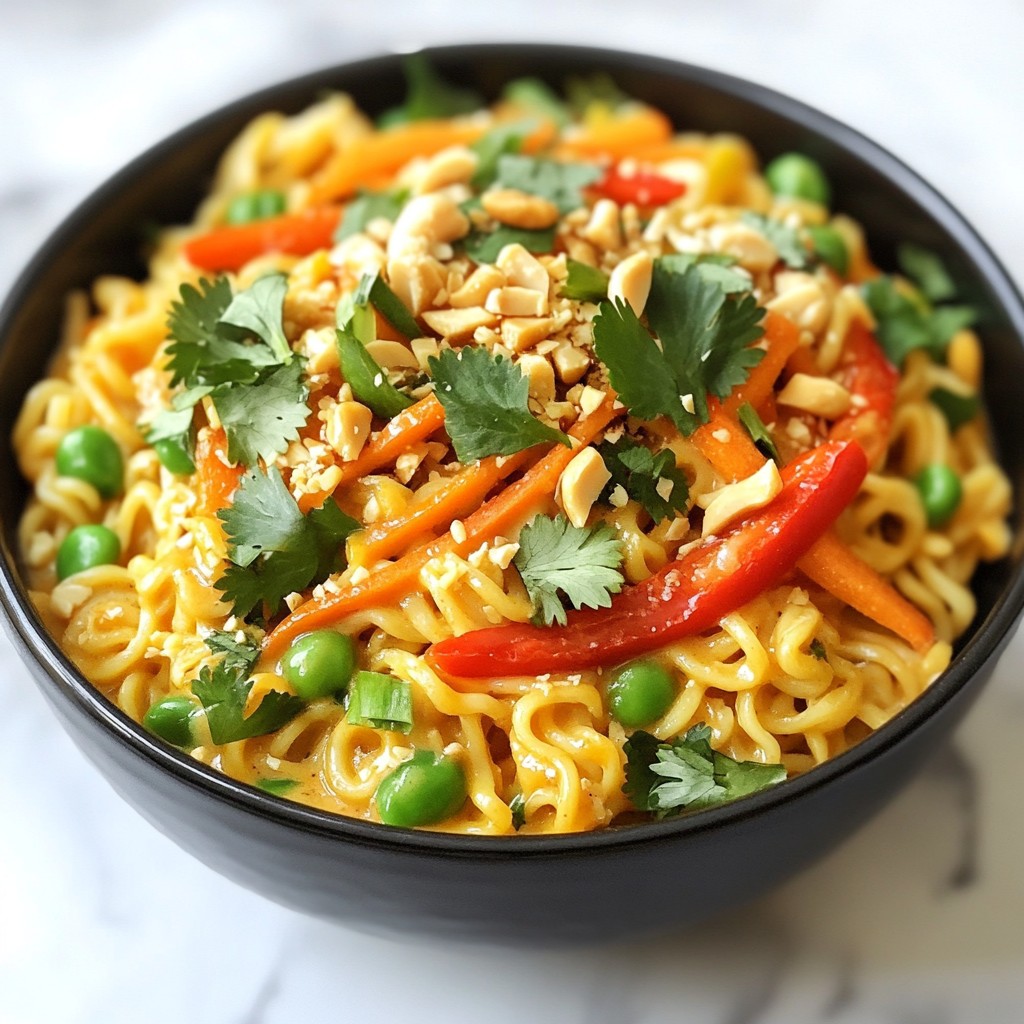
Craving a quick and tasty meal? This Spicy Thai Peanut Ramen recipe packs bold flavors and is super easy to make! You’ll only need some ramen noodles, fresh veggies, and a rich peanut sauce. Perfect for busy weeknights or casual gatherings, this dish is both satisfying and fun to prepare. Join me as we dive into the simple steps to create this amazing bowl of goodness!
Why I Love This Recipe
- Quick and Easy: This recipe takes just 20 minutes from start to finish, making it perfect for a weeknight dinner.
- Flavor Explosion: The combination of spicy sriracha, creamy peanut butter, and fresh lime juice creates a mouthwatering sauce.
- Vegetable-Packed: With a colorful array of veggies, this dish is not only delicious but also nutritious.
- Customizable: You can easily adjust the spice level and swap in your favorite vegetables for a personal touch.
Ingredients
Main Ingredients
- 200g ramen noodles
- 1 tablespoon vegetable oil
- 2 garlic cloves, finely minced
- 1-inch piece of ginger, freshly grated
- 1 medium carrot, julienned
- 1 red bell pepper, sliced into thin strips
- 1 cup snap peas, trimmed
- 2 green onions, sliced (keeping the whites and greens separate)
- 1 cup vegetable broth
- 2 tablespoons soy sauce
- 3 tablespoons creamy peanut butter
- 1 tablespoon sriracha (adjust based on your spice preference)
- 1 tablespoon fresh lime juice
- Salt and freshly ground black pepper to taste
Garnishes
- Chopped roasted peanuts
- Fresh cilantro
- Green onions
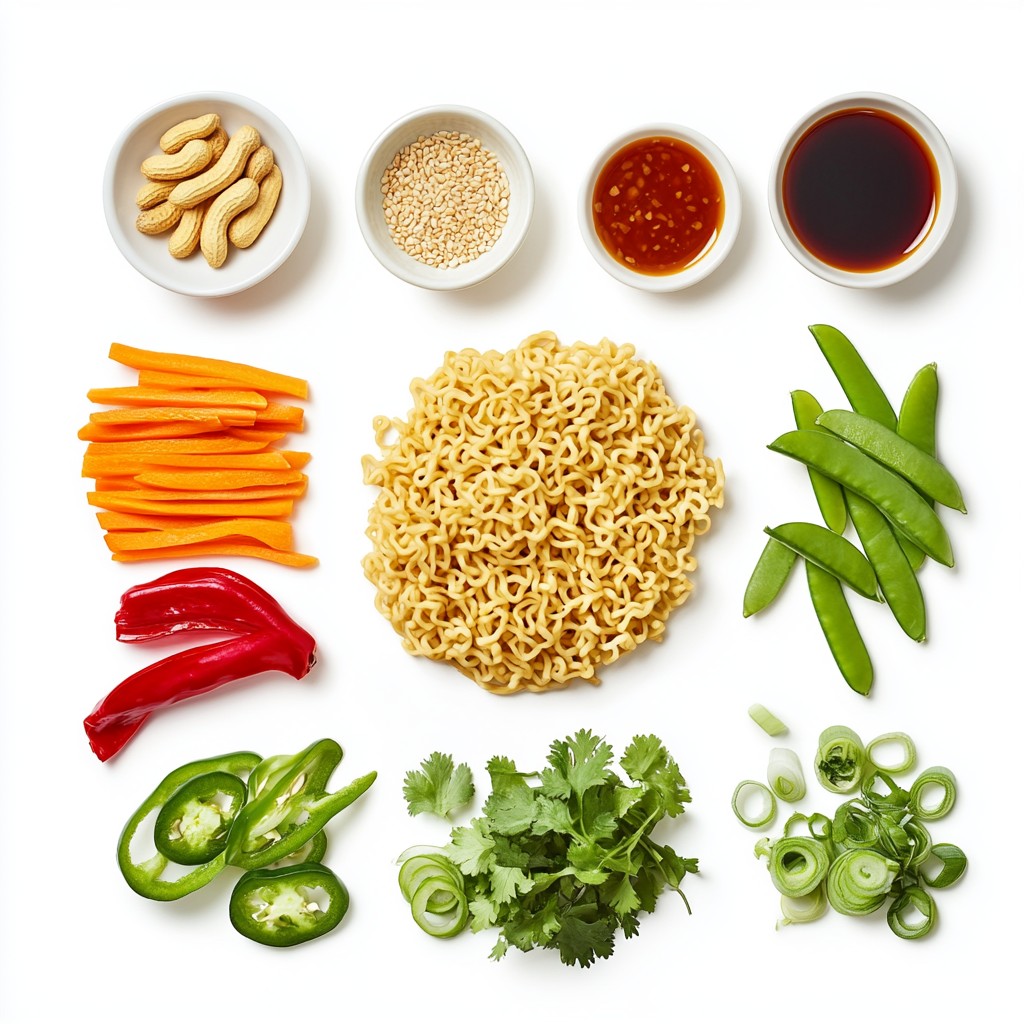
The main ingredients of this recipe are simple yet packed with flavor. Ramen noodles serve as the base. They cook quickly and absorb all the tasty sauce. The vegetable oil helps sauté the garlic and ginger. This step brings a rich aroma to the dish.
Garlic and ginger add a beautiful depth. They mix well with the veggies. I use carrots, red bell peppers, snap peas, and green onions for texture and color. These vegetables make each bite a bit crunchy and fresh.
The peanut sauce is the star here. I combine vegetable broth, soy sauce, creamy peanut butter, sriracha, and lime juice. This mix gives a creamy, spicy, and tangy flavor. You can adjust the sriracha to match your heat level.
Finally, garnishes like chopped roasted peanuts, fresh cilantro, and green onions add a bright finish. These toppings provide a nice crunch and freshness. Enjoy every bite of this dish!
Step-by-Step Instructions
Cooking the Ramen Noodles
To start, boil water in a pot. Add 200 grams of ramen noodles. Cook them as per the package directions. This usually takes about 3-5 minutes. Stir occasionally to prevent sticking. Once cooked, drain them well. Set the noodles aside in a large bowl.
Tips for Achieving Perfect Noodles:
- Don't overcook the noodles. They should be firm yet tender.
- Rinse noodles in cold water if they will sit for a while. This keeps them from sticking.
Preparing the Vegetables
In a large skillet or wok, heat 1 tablespoon of vegetable oil over medium heat. When the oil shimmers, add 2 minced garlic cloves and 1-inch grated ginger. Sauté for about 30 seconds. The garlic should smell great but not burn.
Next, add the julienned carrot and sliced red bell pepper. Stir-fry for 3-4 minutes until they soften. Then, toss in 1 cup of snap peas and the white parts of the sliced green onions. Stir-fry these for 2 more minutes.
Tips on Maintaining Vegetable Crispness:
- Cook on high heat for quick cooking.
- Don’t overcrowd the pan. This keeps heat high and vegetables crisp.
Making the Peanut Sauce
In a separate bowl, whisk together 1 cup of vegetable broth, 2 tablespoons of soy sauce, and 3 tablespoons of creamy peanut butter. Add 1 tablespoon of sriracha and 1 tablespoon of fresh lime juice. Mix until the sauce is smooth.
Adjusting Spice Levels:
- Taste the sauce as you mix. Add more sriracha if you like it spicier.
- For less heat, reduce the sriracha to 1 teaspoon.
Combining Ingredients
Pour the peanut sauce over the stir-fried vegetables. Stir gently for 2-3 minutes. Let the sauce heat and blend with the vegetables.
Now, add the cooked ramen noodles to the skillet. Toss everything together. Make sure the noodles are coated well with the peanut sauce. Cook for another 1-2 minutes to heat through.
Serving Instructions
For serving, dish the Spicy Thai Peanut Ramen into bowls. Top each serving with chopped roasted peanuts and fresh cilantro. Don't forget the green tops of the sliced green onions for color.
Best Practices for Garnishing:
- Use a light hand. A little garnish goes a long way.
- Serve hot for the best flavor and texture.
Tips & Tricks
Common Mistakes to Avoid
- Overcooking the noodles: Ramen noodles cook quickly. Follow package instructions closely. If you overcook them, they become mushy. Aim for al dente texture for the best bite.
- Not seasoning appropriately: Taste your dish as you go. The sauce needs balance. If it feels bland, add salt and pepper. Adjust the sriracha for more heat if desired.
Enhancing Flavor
- Additional spices and sauces to consider: Think about adding chili flakes for a kick. You can also use a splash of sesame oil for depth. A dash of rice vinegar can bring brightness.
- Balance of flavors: Aim for sweet, salty, and spicy. The peanut butter is rich and creamy, so pair it with lime juice for acidity. You want a mix that excites the palate.
Presentation Tips
- Plating ideas for visual appeal: Use a large bowl. Nestle the noodles in the center. Arrange the colorful veggies on top for a vibrant look.
- Garnish recommendations: Finish with a sprinkle of chopped peanuts for crunch. Add fresh cilantro for color and flavor. The green onion tops also add a nice touch.
Pro Tips
- Fresh Ingredients: Use fresh vegetables for the best flavor and texture. The crunch of snap peas and the sweetness of bell peppers make a significant difference.
- Adjusting Spice Levels: Modify the amount of sriracha based on your spice tolerance. You can always add more, but it’s hard to tone it down once it’s in!
- Peanut Butter Varieties: Experiment with different types of peanut butter, such as crunchy or natural, to add unique textures and flavors to your dish.
- Meal Prep Friendly: This dish keeps well in the fridge for up to 3 days, making it a great option for meal prep. Just reheat gently to avoid overcooking the noodles.
Variations
Protein Additions
You can add protein to your Spicy Thai Peanut Ramen in tasty ways. Here are some options:
- Tofu: Use firm tofu for a great texture. Cut it into cubes and pan-fry until golden.
- Chicken: Cook thin strips of chicken breast in the skillet. Make sure it’s fully cooked before adding it to the dish.
- Shrimp: Add peeled shrimp to the skillet during the last few minutes of cooking. They cook quickly and add a nice flavor.
Make sure to cook your protein before mixing it with the noodles. This way, the flavors blend well.
Vegetable Substitutions
Feel free to switch up the vegetables in your ramen. Seasonal veggies work best. Here are some ideas:
- Broccoli: Add small florets for crunch.
- Zucchini: Slice it thin for a fresh taste.
- Bell Peppers: Use any color you like. They add sweetness and color.
Be mindful of allergens. If you have a food allergy, swap out any vegetables that may cause issues.
Spicy Adjustments
Want more heat? Here’s how to adjust the spice level:
- Increase Heat: Add more sriracha or chili paste to the sauce as you mix it.
- Decrease Heat: Use less sriracha. You can also add a touch of honey to balance the spice.
- Alternative Spicy Ingredients: Try red pepper flakes or fresh jalapeños for a different kick.
Adjusting the heat lets you customize your ramen just how you like it.
Storage Info
Refrigeration Guidelines
To keep your Spicy Thai Peanut Ramen fresh, store leftovers in an airtight container. Make sure the dish cools down before sealing it. This helps to trap moisture and keep it tasty. You can store it in the fridge for up to three days. After that, the flavor and texture may start to fade.
Reheating Tips
You can reheat your ramen in two ways: using a microwave or a stovetop. If you use the microwave, heat it in short bursts. Stir after every minute to ensure even heating. For the stovetop, add a little water to the pan. Heat it over low heat, stirring gently. This method helps keep the noodles from getting mushy.
Freezing Instructions
If you want to save your ramen for later, freezing is a good option. Place it in a freezer-safe container. Use plastic wrap to cover it tightly, then seal it with a lid. You can freeze it for up to three months. When you're ready to eat, move it to the fridge to thaw overnight. Reheat it using the stovetop method for the best results.
FAQs
How can I make Spicy Thai Peanut Ramen vegan?
To make this dish vegan, swap the following:
- Use vegetable broth instead of chicken broth.
- Replace the creamy peanut butter with a vegan version if needed.
- Ensure soy sauce is vegan-friendly.
These changes keep the flavors while making it plant-based.
Can I use other types of noodles?
Yes, you can! Here are some options:
- Udon noodles for a thicker bite.
- Rice noodles for a gluten-free choice.
- Soba noodles for a nutty flavor.
Each type adds its own twist to the dish.
What can I do if the sauce is too thick?
If your sauce turns out thick, try these tips:
- Add a splash of vegetable broth for thinning.
- Mix in a bit of water until desired consistency is reached.
- Stir gently to combine and warm through.
These methods will help keep your sauce smooth and tasty.
How do I store and reheat leftovers?
For storing leftovers:
- Place in an airtight container and refrigerate.
- Enjoy within 3 days for best taste.
When reheating:
- Use a microwave or stovetop.
- Add a splash of water or broth to avoid dryness.
This keeps your ramen flavorful and moist.
Can I make the sauce in advance?
Yes, you can prepare the sauce ahead. Here’s how:
- Whisk all sauce ingredients together and store in the fridge.
- Use within a week for best flavor.
When ready to use, just reheat and mix with your noodles and veggies. This saves time on busy days!
In this blog post, we explored how to make delicious Spicy Thai Peanut Ramen. We covered essential ingredients, step-by-step cooking instructions, and tips for enhancing flavor. Remember to avoid common mistakes like overcooking the noodles. For the best taste, use fresh vegetables and crispy toppings. Your ramen can also adapt with various proteins or spice levels. By storing leftovers properly, you keep flavors fresh. Enjoy crafting this dish, and let your taste buds savor every bite. Happy cooking!